Tuesday, May 6, 2014

Environmental Service Fee

Texas State not making full use of environmental service fee
By Nick McCown

The environmental service fee (ESF) at Texas State University, a mandatory $1 per semester for each student, is the lowest of all Texas schools, despite the university being the first in the state to establish this type of fee.

The ESF generates $73,000 each year, which is allocated by the Environmental Service Committee (ESC) on a case-by-case basis to fund various student- or faculty- led environmental projects on campus. ESC meetings are held twice a month to review and consider proposals for funding.

The ESC has funded projects such as reusable water bottle filling stations, a student-run composting organization called Bobcat Blend and outdoor recycling bins, as well as several river cleanups. The committee recently funded an initiative to provide recycling furnishings for university sporting events, according to ESC annual reports.


Water Hydration Station in Evans Liberal Arts Building funded by ESC. Photo Courtesy of Nick McCown

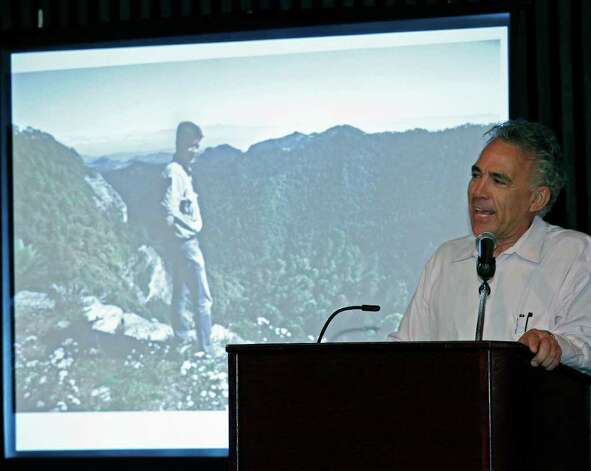
Mark Carter, a Geography professor who has been a voting member of the ESC since its inception, recalled the steps students took to get the fee established.

“We were totally pioneers,” Carter said.  “Since we were changing a fee, we had to have a referendum vote among the students to agree to have this fee.”

In 2000, members of the student chapter of the National Association of Environmental Professionals and the Associated Student Government devised a bill to create a student fee to fund environmental projects and education on campus, according to the ESC webpage.

“ Once that was approved, a small group of these students ended up going to Austin and speaking to some of the legislators about the fee, explaining to them what it was all about,” Carter said. “That’s how it became official public policy that we could have that type of fee.”

The Environmental Service Fee Bill was approved by the Legislature in 2003 during the 78th session and was signed into law by Governor Rick Perry, setting precedence for Texas schools to have an environmental fee, according to the webpage. The fee went into effect at Texas State fall 2004.


Bobcat Blend compost receptacles in LBJ Student Center funded by ESC. Photo courtesy of Nick McCown.

Texas State was the only school in the state to utilize an environmental fee until 2009 when Austin Community College established its Sustainability Fund. In 2010, University of Texas – Austin, Texas A&M University, University of Texas – San Antonio, University of Texas – El Paso, University of North Texas and Rice University adopted similar fees.

“I think of that old saying about when someone copies what you’re doing that that’s the highest form of flattery,” Carter said.  “Well, we were all pleased a couple of years ago when the articles came out about the fact that UT and  A&M had both decided to adopt an environmental service fee that was essentially modeled after what we had done here.”

The rates of the recent environmental fees all exceed Texas State’s ESF.  The aforementioned schools require between $3 and $5 per semester, according to an online index provided by the Campus Green Fund Collaborative, a non-profit collective of campus coordinators involved in managing environmental funds.


Data drawn from Campus Green Fund Collaborative ‘Green Fund Index.’

According to the data, this means the funds Texas State generates per capita from the ESF are on average 4.25 times less than other schools in the state.

“We have a much lower fee than most universities,” said Nancy Nusbaum, account manager for the ESC. “A lot of them focus on utilities, energy consumption, that sort of thing. Our projects have mostly been on the beautification, education, recycling, composting side.”

“We end up with a budget somewhere around $70,000 per year right now. I think that’s a very reasonable amount of money,” Carter said. “I like to think of the ESC as a stimulus fund. We like to stimulate people to try to think in a sustainable way. That’s why I say more money doesn’t necessarily mean we can do that better.”

Carter said committee members have proposed fee increases in the past, but no change has been made.
ESC Chair Mahtisa Djahangiri said her goal as head of the committee was to get the fee raised.

“We want to be able to say look we have no money. We need more,” Djahangiri said. “We won’t get the fee raised unless we do that.”

“That’s an issue we have talked about over the last year or two, about whether we want to move forward with potentially increasing the fee in the future so we can do more things,” Carter said. “Right at the moment, we have been told by the various people that understand how all those things work that the legislature is not in the mode of adding more fees.”

Nusbaum said this type of increase would not be considered until the committee shows it can expend all of the money generated by the fee. Nusbaum said the ESC has never allocated all the money available since she has been involved.

“The committee has always asked, but I told them until they use up all the money for a couple of years, and they have a long list of requests for funding, the administration will never approve an increase,” Nusbaum said.

“We don’t intend to leave money. It just happens. Sometimes we’ll go weeks without any proposals,” Djahangiri said. “We need more proposals in order to spend all of the money.”
Nusbaum said when the ESC doesn’t spend all of the money it has allocated, the amount falls down into reserves and is available for the next year.


Data drawn from university budget reports.

According to university budget reports, the ESC’s reserve account balance has been at least $56,000 since 2008, with a peak of $94,633 in 2012.

Gwendolyn Hustvedt, temporary ESC faculty voting member, said, “The (ESC’s) idea is simply to get the very best projects completed possible. They’re responsible for the spending of the student fees. They’re representing the students, and they want to see what ends up happening be as effective as possible.”

 “I think if were a dollar and (UT is) five, I think we’re doing an amazing job with that dollar and that we could potentially do a lot more,” Hustvedt said.

Djahangiri said, “We want to get the word out every way we can so students know they can come to us and help make their campus better.”

Hustvedt said one way to extend the ESC brand could be to hire students on a continuous basis for website maintenance and communications purposes.

“These students can help raise awareness of the benefits of the sustainability research, education and student activities we do here at Texas State,” Hustvedt said.

Carter agreed staffing positions within the ESC would help with campus awareness and could increase transparency of the committee.

“Record keeping is always a challenge. We have not been consistent over the years in terms of those annual reports,” Carter said. “ If we had a staff member  that 10 hours of their time each month was devoted to coming to the ESC meetings, taking the minutes, updating the website and processing all of the proposals, that would be a good thing.”

“Right now we are focused on awareness, so next year we can push to raise the fee,” Djahangiri said. 

Tuesday, October 22, 2013

Robert Kolker speaks to students about his journey


Senior lecturer at Texas State University and friend of Robert Kolker, Gilbert Martinez, asked Kolker over an Italian dinner if he would speak at Mass Comm Week.
Robert Kolker discussing the Long Island serial killer investigation.

“I didn’t think he would actually say ‘yes’,” Martinez said.

Kolker a New York magazine contributing editor and author of the nonfiction book, “Lost Girls,” joined Texas State students at 8 a.m. Tuesday to not only discuss his summer 2013 book, but also how he got to where he is now.

After graduating, Kolker stayed in New York, even though some thought it was too competitive of a market, he knew he had a passion for the writing process.

“It’s fine to have goals, but you need to be patient, bounce around for a bit and continue searching,” Kolker said.

His experiences at previous magazines and newspapers gave him the “muscles” he needed to churn out stories and make deadlines.

Follow Robert Kolker on Twitter
@BobKolker. 
“[The experiences] are always a chance to learn, you just have to put in the hours,” Kolker said.

The long hours paid off when Kolker’s “Lost Girls” became a New York Times bestseller. The book was a chance for Kolker to tell the stories of the five women involved in the Long Island serial killer investigation.

Kolker wanted to create a greater understanding and explain what is misunderstood about the five women, which Kolker believes, is the most powerful part.
Robert Kolker talking with Texas State students after his
presentation on Tuesday.

“[Journalists] bring stories to light…and bring people together with what [they] do, which makes it worthwhile,” said Kolker.

Paxton Kelly, a Texas State student, has yet to read “Lost Girls,” but cannot wait now.

“The fact that he wouldn’t tell us how it ends intrigued me,” Kelly said after Kolker’s presentation.

Through his writing Kolker hopes to help people understand society in a way they thought they never could.


Danielle Harkness, a Texas State  junior, is majoring in journalism and Spanish. 

Tuesday, February 12, 2013

Sample paste from Word into HTML

You have been selected as a nominee to represent the School of Journalism and Mass Communication in the competition for the President’s Upper Level Scholarship. This means that you are one of several students from the College of Fine Arts who will be considered for this scholarship. Only one student will be awarded the scholarship, but all of the applicants are generally awarded at least a smaller scholarship. So first, let me say congratulations. I represent the School of Journalism and Mass Communication on the College of Fine Arts scholarship committee. In this email I am going to provide you with detailed instructions on what you need to do to be considered for this scholarship.

Sample paste from Word into Compose

-->
You have been selected as a nominee to represent the School of Journalism and Mass Communication in the competition for the President’s Upper Level Scholarship. This means that you are one of several students from the College of Fine Arts who will be considered for this scholarship. Only one student will be awarded the scholarship, but all of the applicants are generally awarded at least a smaller scholarship.

So first, let me say congratulations. I represent the School of Journalism and Mass Communication on the College of Fine Arts scholarship committee. In this email  I am going to provide you with detailed instructions on what you need to do to be considered for this scholarship.

Tuesday, December 11, 2012

Thursday, November 15, 2012

Wednesday, October 31, 2012

Media experts discuss innovation through technology


By Weldon McKenzie

As far as maverick of media Evan Smith is concerned, there has never been a better time to pursue a career in media.

“You probably feel like you’ve lost the lottery generationally,” Smith said. “But I’ve never been more optimistic about this line of work.”

Smith, accompanied by Texas Tribune Chief Innovation Officer Rodney Gibbs, weighed in on the ever-increasing role of technology in media this afternoon in a talk hosted by Texas State’s annual Mass Comm Week.

The Texas Tribune is a nonprofit, nonpartisan media outlet that is only available in online form. The innovative publication focuses on matters in government and data presentation through the use of info graphics and other visual media.

Historically, journalistic practices have been reserved for those who institutionalize themselves under a publications brand in order to produce media. However, through the utilization of technologies such as social media and blogs, Smith said, we are slowly moving away from that “short-leash” mentality.

“Technology has broken down the barriers of journalism,” Smith said.

Smith said this upcoming generation of workers is well equipped for the future of mass media, as it has become acutely familiar with the technology that is changing the field.

Gibbs, who has been with the Texas Tribune for about six months, is in charge of the implementation of technological resources into the publication. He said he views the organization as a tech company who happens to deal with news.

“Our tech department tries to see around corners to figure out the next trending thing,” Gibbs said.

One example of innovation from the Texas Tribune is the creation of two applications that gathers and presents data about public and higher education, which is an otherwise difficult topic to find information on.

Gibbs said one problem he sees with the role of technology and new media is the oversaturation of content. The convenience of social media sites has made it difficult to break through, but the accessibility of these resources gives you many opportunities to make that breakthrough.

“This conversation really made me consider the infinite possibilities I have as a mass comm. student,” said mass communication junior Anish Banskota.

Smith said there is almost no difference between a journalist and a data reporter at the Texas Tribune as a result of the convergence of technology and media.

“We even give technology supporters a by-line for their data,” Smith said.

Mass Comm Week began on Monday and will continue through Thursday Nov. 1.

Tuesday, October 30, 2012

Robert Rivard By: Kaitlin Moore

Robert Rivard Speaks to Students on Changing Media World


By Kaitlin Moore:

            Creator of Rivard Report, Robert Rivard is a speaker for today at Texas State University’s Mass Communication week, speaking with students about how the world is changing and his position on storytelling of San Antonio through journalism.
Rivard also known as Bob, is famously known as the former San Antonio- Express News Editor and Executive Vice President, who had been a leader in the news room since 1997. The Michigan native has worked for over five Texas newspapers expanding over a 34 year career without ever getting a college degree. Rivard now operates and founded  www.rivardreport.com.
Rivard speaks about different ways graduating seniors can get jobs in this changing world. He suggests, “An awful lot of interesting jobs out there are from Start Ups if you are in the media world.” It is small people breaking out of small PR companies, advertising agencies, or marketing agencies.
Rivard also discusses how hiring for media positions have changed. “Previously in Express News people would need five to seven years of experience and worked at one or two other papers. Now we have switched rapidly to hiring people the day they get out of school. Why? Because suddenly we needed to get out of print and get into digital with people who understood how to operate on the web,” says Rivard.
Rivard stresses to the audience about the importance of a good story. He says, “Everyone has at least one great story.” Rivard then connects storytelling from the days of campfires to today. Although it is done completely different people are still moved by a good story.  His website is meant for his readers to not only feel connected to the story, but to feel apart of it. Rivard's fans tweet their love about the website and city: @Thelocalistmap, "Members of our great city never cease to amazing me @rivardreport ! #sanantontio #community." Texas State Senior, John Carter says, “Bob’s story is really inspiring especially to our generation who are about to face the real work and need jobs.”
Mass Communication week will be continuing the rest of the week through November 1st with many other exciting speakers.

Mike Leary -- Matthew Alvarez

                                           Mike Leary speaks to students after his panel.


Mike Leary Discussed The Changing World of Journalism
By Matthew Alvarez
Texas State University’s Mass Comm Week continued with its second day of filled events with Mike Leary, Editor of the San Antonio Express News, speaking to students about his historic past and the future of journalism.
Laura V. Garcia was the student journalist chosen to speak directly to Leary. Discussing certain career moves of Leary’s over the past three decades from a young 23-year-old reporter the Philadelphia Inquirer to the Editor he is today, Leary spoke about the future audience of the San Antonio Express News.
“Our audience is changing,” Leary said. “People coming from Mexico are now our potential readers and many of them speak very good English.”
Leary also discussed the publication from a paper newspaper to print, to which Leary expressed how he enjoys his newspaper through his iPad, but that getting online subscriptions is what newspapers are concentrating on.
With the future of journalism becoming a field that’s constantly evolving Leary left students with why he believes this is an awarding career.        
“I think you want to see the world a better place. You see something that any reasonable person would think is not right,” Leary said. “So reporting on it and showing what is going on results in positive change—that is rewarding.”
Mass Comm week will continue with panels and discussions until Nov. 1. 

Monday, October 29, 2012

Media activist Ethan Zuckerberg discusses its impact in the developing world

Photo by Divya Darsi. Ethan Zuckerman (far right) answers questions from student media panelists Kolten Parker (far left) and Christina Ochoa (middle).


By Divya Darsi

Mass Comm Week 2012 kicks off with a bang as Ethan Zuckerman, director of the Center for Civic Media at MIT and senior researcher at the MIT Media Lab, fielded questions from members of the Texas State student media on Monday.

Texas State students Beth Brown and Kolten Parker for the University Star, Christina Ochoa for the Bobcat Update and Greg Burnam for KTSW formed the student panel. The questions covered a host of issues and topics, ranging from the future of social media to the importance of media.

A conversation of social media dominated the discussion, specifically uses of Twitter. A student asked Zuckerman about the best way to use Twitter. Zuckerman offered some useful advice to students as well as one his most memorable lines, “break the rules, be an artist on Twitter,” he said.  

Another question asked whether it was possible to be over-connected as social media takes over people’s lives and personal interactions are becoming limited. Zuckerman remains un-persuaded that the effects of social media are hazardous in that way, he instead said, “If you feel like you’re being overwhelmed by information you probably need to think about how you’re taking that information in.”

Zuckerman pointed out to the packed theater that social media provides a level of social connectivity for its users. “I would rather blame architecture…the car culture for the breakdown of the face to face. I tend to see what we are doing online as a way of fighting back,” he said. Appropriately, students were encouraged to live-tweet with their comments and questions.

Students left the discussion with new ideas about social media and the many ways it can positively and negatively impact society. Cameron Cutshall, a sophomore and English major, liked the live twitter feed, “it provided a better understanding of the discussion and made me feel more involved,” he said.

Junior and Mass Comm major Cade Crowder said, “What I took away from the panel is that media is growing and developing and not all is inaccurate.”

Texas State’s Mass Comm Week continues with panels and discussions through Thursday, Nov. 1.

Thursday, October 25, 2012

Strong Words Week 9- Myriann Harden

This week I chose this The New Yorker article about election polls. I think it is interesting that someone  boldly says that polls do not matter when it comes to big elections.

I believe that it is true that no one can predict human behavior, so polls are basically meaningless. They become even more meaningless as our world changes and more media outlets appear. It seems like every news outlet has their own poll numbers, and none of them agree with the others.

Also it is very easy for some groups to sway the poll(s) in favor of their group or party.

Strong words journal week 9

 I picked the phrase "HORSES AND BAYONETS" used  by president Barack Obama during the presidential debate because it was  catchy  and hilarious, and will always be remembered.Those who missed the October 22nd Monday debate can have a light moment reading this item.    

What caught my eye

As I was scanning Google News for a headline that would jump out at me, I found this article titled
"Arrests made in shooting of Pakistani schoolgirl Malala".  The addition of the victim's name in the headline automatically brings forth the feeling of the impact the story is trying to get across.  If  single word to be removed from this title, it simply would not be as powerful as it is.

The story has an impact by using the reader's emotions to keep interest held, chiefly the concern for the girl's condition.  The full story can be found here.

Tuesday, October 23, 2012

Strong Words:

I usually scan newseum for headlines for the strong words journal. Here's what I found for week 9. Week 9!?!?! Already!?!?!

The Times in London has a great image of Mitt Romney, apparently playing or attempting to scare, with his grandson. I think it's funny when papers print images of people right before a sneeze or in this case, right before attempting to scare the kid like Brando in the "The Godfather."'

Aaaargh Romney!

By Kevin Stockwell

Style and formatting for Mass Comm Week blog

Follow these standard formatting rules when writing your Mass Comm Week story.
  • Headlines
Use down style - that means use uppercase only for the first word of the headline and for proper nouns
  • Bylines
 The byline should be at the top of the story before you begin the text and formatted as in the example screen grab at the bottom of this post.
  • Text
The text should conform to the style of the blog. Do not indent paragraphs. After each paragraph, simply hit return once and begin typing the next paragraph. The blog formatting will insert one space between your paragraphs. If you plan to cut and paste from Word, follow the cut-and-paste directions posted on this blog.
  • Links
All posts should include appropriate links. Consider linking to the speaker's place of employment, his or her work samples or website or other relevant material mentioned during the presentation. Links are best when they are tied to appropriate words rather than inserted as URLs or added at the end of stories. If you want to link to the Mass Comm Week blog, this would be the appropriate way to do that. 
  • Photos
Insert photos in a way that works well with the design of the post. Blogs don't afford much control of the design but you are able to select a size and placement. Don't make the photo too large or too small for the content. Add a photo caption, or cutline as journalists refer to it, and a photo credit. The sample screen shot below does not include a photo credit or cutline, but you should.
  • Video
If you include video, include an intro paragraph of text that acts as a lead explaining a bit about the session so that the video makes sense. You don't have to explain what readers will see on the video but offer a short intro to the session and then embed the video. Include a byline before your text.
  • Storify
If you post a Storify, add an intro paragraph that tips to the Storify. It should be a lead-in paragraph and then insert a page break, which is the tool called insert jump break that looks like a page with a jagged line. You might even consider doing a screen grab of a piece of your Storify, a photo from your Storify or even a photo you took and adding that before your page break so that your post is more visually appealing. The page break will put the Storify on the next page for readers who click read more. Be sure to add a byline at the top of your initial post.
  • Corrections or errors
It is very important that all names and proper nouns be spelled correctly and that all facts be correct and fact checked. This publication reflects on you, the school and the university.
If you make a mistake or need to edit your post, please sign in to the blog and click the pencil icon at the bottom of your post to access your post and make the correction. If you don't see your post on the blog, it may have been placed in draft mode pending corrections. If you cannot access your post to make corrections, contact your professor for instructions.
Fact errors and name misspellings will result in a significant grade reduction, but that is nothing compared to the embarrassment of having a mass comm speaker tweet about how a Texas State student got a name wrong.
It is a good idea to find an editing partner to read your post before you post or right after you post. We are all better with editing.
  • Class Assignments
Refer to your specific class assignments for what is required in your class. These guidelines are designed to help you present your material in a professional manner on the Mass Comm Week blog. The blog is viewed by thousands of people during Mass Comm Week, including the people you are writing about, so you want to make a good impression.

  • Sample post
This post is not perfect. It needs links and could use a cutline and photo credit, but it gives you and idea of what your post should look like.